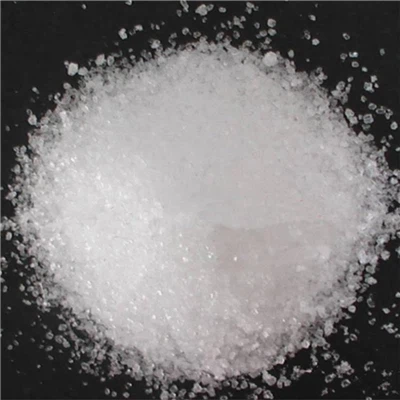
Hey there! As a supplier of Solid Sodium Cyanide, I've got a lot to share about this fascinating chemical, especially when it comes to its adsorption isotherms on specific materials.
First off, let's talk a bit about solid sodium cyanide itself. It's a highly toxic but extremely useful chemical compound. It's widely used in industries like mining, where it helps in the extraction of precious metals such as gold and silver. It's also used in the production of various organic chemicals. But today, we're going to focus on its adsorption isotherms.
What exactly are adsorption isotherms? Well, they're basically graphs that show the relationship between the amount of a substance (in this case, solid sodium cyanide) adsorbed onto a material's surface and the equilibrium pressure or concentration of the adsorbate at a constant temperature. Understanding these isotherms is crucial because it can help us figure out how well a particular material can adsorb solid sodium cyanide, which has a lot of practical applications.
There are several types of adsorption isotherms, and each one tells us different things about the adsorption process. The most common ones are the Langmuir, Freundlich, and BET isotherms.
Let's start with the Langmuir isotherm. This is based on the idea that adsorption happens on a homogeneous surface, where each adsorption site can hold only one molecule of the adsorbate. It assumes that there's no interaction between the adsorbed molecules and that the adsorption process reaches an equilibrium state. The Langmuir isotherm equation can be written as:
[
\frac{C}{q} =\frac{1}{q_{max}K}+ \frac{C}{q_{max}}
]
where (C) is the equilibrium concentration of the adsorbate, (q) is the amount of adsorbate adsorbed per unit mass of the adsorbent, (q_{max}) is the maximum amount of adsorbate that can be adsorbed per unit mass of the adsorbent (the monolayer capacity), and (K) is the Langmuir constant related to the affinity between the adsorbent and the adsorbate.
When it comes to solid sodium cyanide adsorption on specific materials, the Langmuir isotherm can help us understand if the adsorption is a monolayer process. If the experimental data fit well with the Langmuir equation, it means that the adsorption sites on the material's surface are uniform, and the adsorption occurs in a single layer.
Next up is the Freundlich isotherm. This isotherm is more empirical and is used to describe adsorption on heterogeneous surfaces. It doesn't assume a monolayer adsorption but rather that the adsorption energy varies across the surface. The Freundlich equation is:
[
q = K_{F}C^{\frac{1}{n}}
]
where (K_{F}) and (n) are the Freundlich constants. (K_{F}) is related to the adsorption capacity, and (n) gives an idea about the intensity of the adsorption. If (n) is between 1 and 10, it indicates favorable adsorption.
For solid sodium cyanide adsorption, the Freundlich isotherm can be useful when the material has a non - uniform surface. For example, if the material is a porous solid with different types of pores and surface sites, the Freundlich isotherm might provide a better fit to the experimental data compared to the Langmuir isotherm.


The BET (Brunauer - Emmett - Teller) isotherm is mainly used to describe multilayer adsorption. It takes into account the fact that after the first layer of adsorbate molecules is adsorbed on the surface, additional layers can form on top of the first layer. The BET equation is more complex than the Langmuir and Freundlich equations, but it's very important when dealing with materials that can adsorb multiple layers of solid sodium cyanide.
Now, let's talk about some specific materials and how solid sodium cyanide adsorbs on them. One common material is activated carbon. Activated carbon has a very high surface area and a porous structure, which makes it a great adsorbent. When solid sodium cyanide is in contact with activated carbon, the cyanide ions can be adsorbed onto the surface of the carbon through various mechanisms such as electrostatic attraction and chemical bonding.
The adsorption of solid sodium cyanide on activated carbon can follow different isotherms depending on the conditions. At low concentrations, the Langmuir isotherm might be a good fit, indicating monolayer adsorption. But as the concentration increases, the BET isotherm could be more appropriate if multilayer adsorption occurs.
Another material is zeolites. Zeolites are crystalline aluminosilicates with a well - defined pore structure. They can selectively adsorb molecules based on their size and shape. Solid sodium cyanide can be adsorbed into the pores of zeolites, and the adsorption is often influenced by the ion - exchange properties of the zeolites. The Freundlich isotherm might be suitable to describe the adsorption of solid sodium cyanide on zeolites, as the surface of zeolites is heterogeneous due to the presence of different types of cations and pore sizes.
Understanding the adsorption isotherms of solid sodium cyanide on these and other materials is not just an academic exercise. It has real - world implications. In the mining industry, for example, knowing how solid sodium cyanide adsorbs on different materials can help in optimizing the extraction process. If we can find a material that can adsorb solid sodium cyanide efficiently and selectively, we can reduce the amount of cyanide lost in the process and make it more environmentally friendly.
In the chemical manufacturing industry, adsorption isotherms can help in the design of purification processes. If we know how solid sodium cyanide adsorbs on a particular adsorbent, we can use it to remove impurities from a sodium cyanide solution.
As a supplier of Solid Sodium Cyanide, I understand the importance of these scientific concepts. We're always looking for ways to improve the quality of our products and make the processes that use our products more efficient and sustainable.
If you're in an industry that uses solid sodium cyanide and you're interested in learning more about its adsorption properties on specific materials, or if you're looking to purchase high - quality solid sodium cyanide for your operations, don't hesitate to reach out. We're here to provide you with the best products and the knowledge you need to make informed decisions. Whether you're involved in mining, chemical manufacturing, or any other field that uses Solid Cyanide, we've got you covered.
Let's work together to make your processes better and more efficient. Contact us today to start a discussion about your needs and how our solid sodium cyanide can fit into your operations.
References:
- Adamson, A. W., & Gast, A. P. (1997). Physical Chemistry of Surfaces. Wiley.
- Sing, K. S. W., Everett, D. H., Haul, R. A. W., Moscou, L., Pierotti, R. A., Rouquerol, J., & Siemieniewska, T. (1985). Reporting physisorption data for gas/solid systems with special reference to the determination of surface area and porosity. Pure and Applied Chemistry, 57(4), 603 - 619.
- Gregg, S. J., & Sing, K. S. W. (1982). Adsorption, Surface Area and Porosity. Academic Press.