Your Professional Phosphorous Acid Supplier!
Nantong Shengfeng Chemical Co., Ltd. is located in Fengli Town, Nantong City, bordering the Yangtze River to the south and the Yellow Sea to the east. Situated within Shanghai's one-hour economic circle, it enjoys convenient land and water transportation, giving it a significant geographical advantage. The company specializes in producing a series of phosphonates, including phosphonic acid, potassium dihydrogen phosphate, and potassium phosphonate.
-
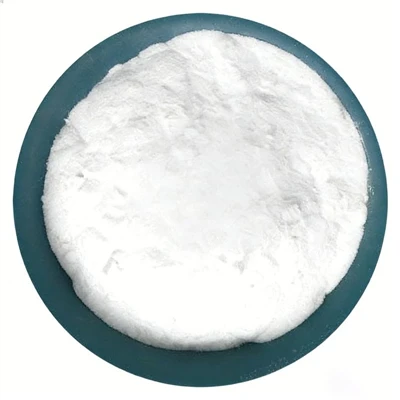
![Solid Phosphorous Acid]() Solid Phosphorous AcidSolid phosphorous acid is a widely used inorganic compound with the chemical formula H₃PO₃, a molecular weight of 82.00 and a CAS registry number of 13598-36-2.read more
Solid Phosphorous AcidSolid phosphorous acid is a widely used inorganic compound with the chemical formula H₃PO₃, a molecular weight of 82.00 and a CAS registry number of 13598-36-2.read more -
![Acid Phosphoric Acid]() Acid Phosphoric Acidacid phosphoric acid is an inorganic compound with the chemical formula H₃PO₃, a molecular weight of 82.00, and a CAS registry number of 13598-36-2. It appears as colorless to pale yellow crystalline flakes with a garlic-like odor, and isread more
Acid Phosphoric Acidacid phosphoric acid is an inorganic compound with the chemical formula H₃PO₃, a molecular weight of 82.00, and a CAS registry number of 13598-36-2. It appears as colorless to pale yellow crystalline flakes with a garlic-like odor, and isread more -
![Hyper Phosphoric Acid]() Hyper Phosphoric AcidHyper phosphoric acid is a widely used inorganic compound with the chemical formula H₃PO₃, a molecular weight of 82.00 and a CAS registry number of 13598-36-2.read more
Hyper Phosphoric AcidHyper phosphoric acid is a widely used inorganic compound with the chemical formula H₃PO₃, a molecular weight of 82.00 and a CAS registry number of 13598-36-2.read more -
![Phosphorous Acid Solution]() Phosphorous Acid SolutionPhosphorous acid solution is a crucial basic raw material in chemical production, with its fundamental information and physicochemical parameters presented in the table belowread more
Phosphorous Acid SolutionPhosphorous acid solution is a crucial basic raw material in chemical production, with its fundamental information and physicochemical parameters presented in the table belowread more


Why Choose Us
Rich Experience
We have accumulated 16 years of mature, All products strictly adhere to national standards, ensuring stable and reliable quality.
Sales Market
Our products are exported to South America, North America, Australia, and most parts of Europe, winning unanimous praise from customers both domestically and internationally.
Production Equipment
The production equipment is fully equipped, including 20 reaction kettles, 4 centrifuges, a thermal oil circulating boiler, and a small packaging filling line, which can fully meet the needs of large-scale production and standardized packaging of a series of phosphonate products.
Our Service
We have a professional service team that can provide clients with end-to-end problem solutions. We also support customized formulations with different content specifications and packaging methods based on clients' usage habits and individual needs, maximizing the satisfaction of diverse client requirements.
Overview of Phosphorous Acid
Phosphoric acid (H3PO4) is a colorless, odorless inorganic mineral acid, commonly used as an 85% aqueous solution. It is widely used in fertilizers, food flavoring (especially in cola), and rust removal. While it is a weak acid, it is highly corrosive to metals and skin in high concentrations.
Product Specification
We offers the following product specifications:
|
Composition |
H3PO3 |
|
CAS |
13598-36-2 |
|
Melting Point |
73 C |
|
Density |
1.65 g/ml |
|
Molecular Weight |
Mol. wt. = 82.0 |
|
Boiling Point |
200 C (dec) |

Waste Minimization: Continuous-flow reactors in phosphite ester synthesis recycle unreacted acid, reducing disposal needs.
Safer Alternatives: Biodegradable phosphites replace halogenated flame retardants, minimizing environmental persistence.
Energy Efficiency: Low-temperature microreactors (e.g., 40°C) cut energy use in pharmaceutical synthesis.
Catalysis: Non-toxic catalysts (e.g., silica-based) improve yields in fungicide production, reducing excess acid.
Real-Time Monitoring: Sensors track phosphite levels in water treatment, optimizing dosing (<10 ppm).
Application
Metal Treatment & Rust Conversion
Converts iron oxide to protective ferric phosphate coating. Industry standard for automotive restoration and structural steel preparation.
Fertilizer Production
Backbone of global agriculture. Used to produce MAP and DAP fertilizers providing essential phosphorus for plant growth and root development.
Water Treatment
Adjusts pH and inhibits corrosion in municipal and industrial water systems. Prevents scale buildup in boilers and cooling towers.
Laboratory & Research
ACS-grade purity for analytical chemistry, reagent preparation, and high-precision applications in research and quality control.
Electronics Fabrication
Used for etching and cleaning semiconductor wafers, PCBs, and LCD panels. ACS purity prevents trace metal contamination.
Concrete & Masonry
Etches concrete surfaces for sealant adhesion. Removes efflorescence and mineral deposits from masonry structures.
Personal Protective Equipment: Always wear chemical-resistant gloves (nitrile or neoprene), splash-proof safety goggles, and a face shield when handling concentrated solutions. A chemical-resistant apron is recommended for bulk transfers.
Ventilation: While phosphoric acid is non-volatile at room temperature, heating or vigorous agitation can produce irritating mists. Use in a well-ventilated area or under local exhaust ventilation. Respiratory protection (acid gas cartridge) is recommended when heating above 100 °C.
Storage: Store in HDPE, polypropylene, or PTFE-lined containers in a cool, dry, well-ventilated area. Keep away from incompatible materials including strong bases (sodium hydroxide), active metals (zinc, magnesium), and oxidizing agents. Ensure containers are properly labeled and secondary containment is in place.
Spill Response: Contain the spill and neutralize with a weak base such as soda ash (sodium carbonate) or sodium bicarbonate. Apply gradually to avoid excessive foaming. Collect neutralized material and dispose of according to local regulations.

Package & Delivery
Regular Packaging: 25 kg per fiber drum (lined with plastic bag)
Customized Packaging: 1 kg, 5 kg, 25 kg and other specifications available according to customer requirements

FAQ
We're well-known as one of the most experienced phosphorous acid enterprises in China for 20 years. Please feel free to buy discount phosphorous acid made in China here and get free sample from our factory. For price consultation, contact us.
Acid Phosphoric Acid, Phosphorous Acid Solution, phosphorous acid-
![2-(Phenylamino)acetonitrile]() 2-(Phenylamino)acetonitrileProduct Name: 2-(Phenylamino)acetonitrileCAS Number: 3009-90-3Purity (HPLC): ≥ 95.0%Appearance: Light yellow to beigeread more
2-(Phenylamino)acetonitrileProduct Name: 2-(Phenylamino)acetonitrileCAS Number: 3009-90-3Purity (HPLC): ≥ 95.0%Appearance: Light yellow to beigeread more -
![N-Phenylglycinonitrile]() N-PhenylglycinonitrileProduct Name: N-PhenylglycinonitrileCAS Number: 3009-90-3Purity (HPLC): ≥ 96.0%Appearance: Light yellow toread more
N-PhenylglycinonitrileProduct Name: N-PhenylglycinonitrileCAS Number: 3009-90-3Purity (HPLC): ≥ 96.0%Appearance: Light yellow toread more -
![Bis(cyanomethyl)amine]() Bis(cyanomethyl)amineProduct Name: Bis(cyanomethyl)amine (92% Purity)CAS Number: 628-87-5Purity (HPLC): ≥ 92.0%Appearance: Light yellow toread more
Bis(cyanomethyl)amineProduct Name: Bis(cyanomethyl)amine (92% Purity)CAS Number: 628-87-5Purity (HPLC): ≥ 92.0%Appearance: Light yellow toread more -
![IDAN]()
-
![Iminodiacetic Acid]() Iminodiacetic AcidProduct Name: Iminodiacetic acidCAS Number: 142-73-4Purity (HPLC): ≥ 99.0%Appearance: White crystalline powderChlorideread more
Iminodiacetic AcidProduct Name: Iminodiacetic acidCAS Number: 142-73-4Purity (HPLC): ≥ 99.0%Appearance: White crystalline powderChlorideread more -
![Mandelic Acid]() Mandelic AcidProduct Name: Mandelic acidCAS Number: 90-64-2Purity: ≥ 98.0%Appearance: White crystalline powder or granularread more
Mandelic AcidProduct Name: Mandelic acidCAS Number: 90-64-2Purity: ≥ 98.0%Appearance: White crystalline powder or granularread more -
![Phenylglycolic Acid]() Phenylglycolic AcidProduct Name: Phenylglycolic acid (DL-Mandelic Acid)CAS Number: 90-64-2Purity: ≥ 98.5%Appearance: White crystallineread more
Phenylglycolic AcidProduct Name: Phenylglycolic acid (DL-Mandelic Acid)CAS Number: 90-64-2Purity: ≥ 98.5%Appearance: White crystallineread more -
![DL-Mandelic Acid]() DL-Mandelic AcidProduct Name: DL-Mandelic acidCAS Number: 90-64-2Purity (Titration): ≥ 99.0%Appearance: White crystalline powderMeltingread more
DL-Mandelic AcidProduct Name: DL-Mandelic acidCAS Number: 90-64-2Purity (Titration): ≥ 99.0%Appearance: White crystalline powderMeltingread more -
![1,2-Diaminomaleonitrile]() 1,2-DiaminomaleonitrileProduct Name: 1,2-DiaminomaleonitrileCAS Number: 1128-52-5Purity (HPLC): ≥ 98.0%Appearance: Light yellow to brownread more
1,2-DiaminomaleonitrileProduct Name: 1,2-DiaminomaleonitrileCAS Number: 1128-52-5Purity (HPLC): ≥ 98.0%Appearance: Light yellow to brownread more