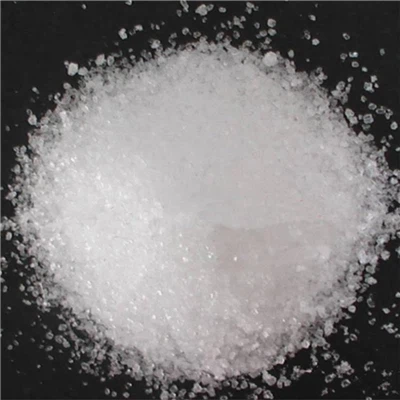
Emulsifying properties play a crucial role in various industries, such as food, cosmetics, and pharmaceuticals. As a supplier of Disodium Hydrogen Phosphite, I am often asked about its emulsifying capabilities. In this blog post, I will delve into the emulsifying properties of Disodium Hydrogen Phosphite, exploring its mechanisms, applications, and advantages.
Understanding Emulsions and Emulsifiers
Before discussing the emulsifying properties of Disodium Hydrogen Phosphite, it is essential to understand what emulsions and emulsifiers are. An emulsion is a mixture of two immiscible liquids, typically oil and water, where one liquid is dispersed in the other in the form of small droplets. Emulsions are unstable systems, and without the presence of an emulsifier, the droplets will eventually coalesce, leading to phase separation.
An emulsifier is a substance that stabilizes emulsions by reducing the surface tension between the two immiscible liquids and preventing the droplets from coalescing. Emulsifiers have both hydrophilic (water - loving) and lipophilic (oil - loving) parts in their molecular structure, which allows them to interact with both the oil and water phases and form a stable interface.
Mechanisms of Emulsification by Disodium Hydrogen Phosphite
Disodium Hydrogen Phosphite, with the chemical formula Na₂HPO₃, can act as an emulsifier through several mechanisms. Firstly, its ionic nature allows it to interact with the charged surfaces of the droplets in an emulsion. When added to an oil - water system, the Disodium Hydrogen Phosphite molecules can adsorb onto the surface of the oil droplets, creating a charged layer around them. This charged layer generates electrostatic repulsion between the droplets, preventing them from coming close enough to coalesce.
Secondly, Disodium Hydrogen Phosphite can modify the interfacial properties of the oil - water system. It can reduce the interfacial tension between the oil and water phases, making it easier for the oil to be dispersed into small droplets in the water phase. By lowering the interfacial tension, the energy required to create new surface area during the emulsification process is reduced, facilitating the formation of a stable emulsion.
Applications of Disodium Hydrogen Phosphite as an Emulsifier
Food Industry
In the food industry, emulsions are widely used in products such as salad dressings, mayonnaise, and ice cream. Disodium Hydrogen Phosphite can be used as an emulsifier in these products to improve their stability and texture. For example, in salad dressings, it helps to keep the oil and vinegar from separating, ensuring a homogeneous and consistent product. In ice cream, it can prevent the formation of ice crystals and improve the smoothness and creaminess of the final product.
Cosmetics Industry
Cosmetic products often contain emulsions, such as creams, lotions, and makeup. Disodium Hydrogen Phosphite can be incorporated into these formulations to stabilize the oil - water emulsions. It helps to prevent the separation of the oil and water phases during storage and use, ensuring the product remains in a stable and usable form. Additionally, it can improve the spreadability and feel of the cosmetic products on the skin.
Pharmaceutical Industry
In the pharmaceutical industry, emulsions are used for drug delivery systems. Disodium Hydrogen Phosphite can be used as an emulsifier in these systems to ensure the stability of the drug - containing emulsion. It can help to maintain the uniform distribution of the drug in the emulsion, improving its bioavailability and efficacy.


Advantages of Using Disodium Hydrogen Phosphite as an Emulsifier
One of the main advantages of using Disodium Hydrogen Phosphite as an emulsifier is its relatively low cost. Compared to some other specialized emulsifiers, Disodium Hydrogen Phosphite is more affordable, making it an attractive option for industries looking to reduce production costs.
Another advantage is its safety. Disodium Hydrogen Phosphite is generally recognized as safe (GRAS) for use in food and other industries when used within the specified limits. It has a long - standing history of use in various applications, and its safety profile has been well - established.
Furthermore, Disodium Hydrogen Phosphite has good solubility in water, which makes it easy to incorporate into aqueous - based systems. This solubility allows for efficient mixing and dispersion in the emulsion, ensuring its effectiveness as an emulsifier.
Comparison with Other Phosphite Salts
In addition to Disodium Hydrogen Phosphite, other phosphite salts such as Diammonium Phosphite and Mono Potassium Phosphite can also have emulsifying properties. However, each salt has its own unique characteristics.
Diammonium Phosphite, for example, has a different ionic nature compared to Disodium Hydrogen Phosphite. The ammonium ions in Diammonium Phosphite can interact differently with the emulsion droplets, potentially leading to different emulsification mechanisms and performance. Mono Potassium Phosphite also has its own set of properties, and the choice between these phosphite salts depends on the specific requirements of the emulsion system, such as the pH, temperature, and the nature of the oil and water phases.
Factors Affecting the Emulsifying Properties of Disodium Hydrogen Phosphite
The emulsifying properties of Disodium Hydrogen Phosphite can be affected by several factors. The concentration of Disodium Hydrogen Phosphite in the emulsion is a critical factor. Generally, an optimal concentration is required to achieve the best emulsification results. Too low a concentration may not provide sufficient stabilization, while too high a concentration may lead to unwanted side effects, such as changes in the taste or texture of the product.
The pH of the emulsion system also plays an important role. Disodium Hydrogen Phosphite can exist in different ionic forms depending on the pH. The different ionic forms may have different emulsifying capabilities, so adjusting the pH can optimize the emulsification performance.
Temperature is another factor that can affect the emulsifying properties of Disodium Hydrogen Phosphite. Higher temperatures can increase the kinetic energy of the molecules, which may affect the adsorption of Disodium Hydrogen Phosphite onto the droplet surfaces and the stability of the emulsion.
Conclusion
Disodium Hydrogen Phosphite has significant emulsifying properties that make it a valuable ingredient in various industries. Its ability to stabilize emulsions through electrostatic repulsion and interfacial tension reduction, combined with its low cost, safety, and good solubility, makes it an attractive option for many applications. Whether in the food, cosmetics, or pharmaceutical industries, Disodium Hydrogen Phosphite can help to create stable and high - quality emulsions.
If you are interested in learning more about Disodium Hydrogen Phosphite and its potential use in your products, or if you are looking to purchase Disodium Hydrogen Phosphite for your emulsification needs, please feel free to contact us. We are ready to discuss your specific requirements and provide you with the best solutions.
References
- McClements, D. J. (2005). Food Emulsions: Principles, Practice, and Techniques. CRC Press.
- Friberg, S. E., Larsson, K., & Sjoblom, J. (2004). Encyclopedia of Emulsion Technology. Marcel Dekker.
- Becher, P. (1965). Emulsions: Theory and Practice. Reinhold Publishing Corporation.