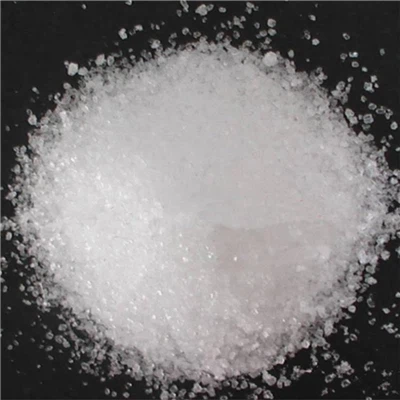
Hey there! As a phosphorous acid supplier, I'm super stoked to chat about the electrochemical properties of this pretty cool chemical. Phosphorous acid, with the formula H₃PO₃, might not be as well - known as some other acids, but it's got some really interesting characteristics that are worth diving into.
Let's start with the basics. Phosphorous acid is a diprotic acid, which means it can donate two protons (H⁺ ions) in an aqueous solution. This property is key when we're talking about its electrochemical behavior. In water, it undergoes a step - wise dissociation. The first dissociation is relatively easy:
H₃PO₃ ⇌ H⁺ + H₂PO₃⁻
The second dissociation is a bit more difficult:
H₂PO₃⁻ ⇌ H⁺ + HPO₃²⁻
This step - wise dissociation affects the acid's ability to conduct electricity. When dissolved in water, the ions produced from the dissociation allow the solution to conduct an electric current. The more ions there are in the solution, the better the conductivity.
One of the most important electrochemical properties of phosphorous acid is its redox behavior. Phosphorous acid can act as a reducing agent. In a redox reaction, it can donate electrons to other substances. For example, it can reduce metal ions. When it reacts with copper(II) ions (Cu²⁺), it can convert them to copper metal (Cu). The reaction goes something like this:
3H₃PO₃ + 2Cu²⁺ + 2H₂O → 2Cu + 3H₃PO₄ + 2H⁺
This ability to reduce metal ions is not only important in laboratory settings but also has practical applications in industries like electroplating. In electroplating, a thin layer of metal is deposited on an object. Phosphorous acid can be used to help control the reduction of metal ions and ensure a smooth and even plating.
The standard reduction potential of phosphorous acid is an important electrochemical parameter. It gives us an idea of how easily it can be reduced or oxidized. The reduction potential of the H₃PO₄/H₃PO₃ couple is around - 0.276 V (vs. SHE - Standard Hydrogen Electrode). This value indicates that under standard conditions, phosphorous acid is a moderately strong reducing agent.
Another aspect of its electrochemical properties is its behavior in different pH environments. The dissociation of phosphorous acid is pH - dependent. At low pH values, most of the phosphorous acid exists in its undissociated form (H₃PO₃). As the pH increases, more of the acid dissociates into its anionic forms (H₂PO₃⁻ and HPO₃²⁻). This change in the ionic species present in the solution affects its electrochemical properties, such as conductivity and redox potential.
Now, let's talk about some of the products we offer as a phosphorous acid supplier. We have Solid Phosphorous Acid. This solid form is great for applications where you need a more stable and easy - to - handle version of phosphorous acid. It can be stored for longer periods without significant degradation.
We also have Acid Phosphoric Acid. Although it's a different acid, it's often used in conjunction with phosphorous acid in various chemical processes. The combination of these two acids can enhance the performance of certain reactions, especially in the production of fertilizers and food additives.
And then there's Hyper Phosphoric Acid. This acid has its own unique electrochemical properties and is used in specialized applications, such as in the synthesis of high - energy compounds.


If you're in the market for phosphorous acid or any of our related products, we'd love to have a chat with you. Whether you're a researcher looking for high - purity chemicals for your experiments or an industry professional in need of bulk supplies, we've got you covered. Reach out to us to discuss your specific requirements and let's work together to find the best solution for you.
In conclusion, phosphorous acid's electrochemical properties make it a versatile and valuable chemical. Its ability to act as a reducing agent, its pH - dependent behavior, and its role in various chemical reactions make it an important component in many industries. If you have any questions or want to learn more about our products, don't hesitate to get in touch.
References
- Atkins, P. W., & de Paula, J. (2014). Physical Chemistry. Oxford University Press.
- Housecroft, C. E., & Sharpe, A. G. (2012). Inorganic Chemistry. Pearson.