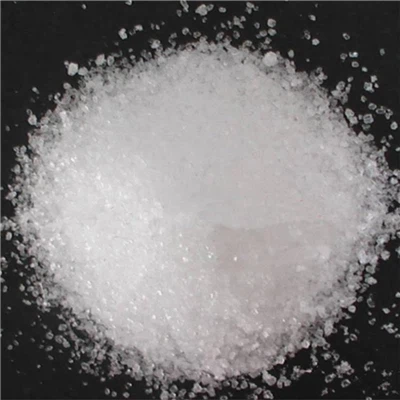
Hey there! As a phosphorous acid supplier, I often get asked about how phosphorous acid reacts with ammonia. It's a pretty interesting topic, so I thought I'd share some insights with you all.
First off, let's talk a bit about phosphorous acid itself. Phosphorous acid, with the chemical formula H₃PO₃, is a diprotic acid. That means it can donate two protons in a chemical reaction. It's a pretty important compound in various industries, and we offer different types like Hyper Phosphoric Acid, Acid Phosphoric Acid, and Solid Phosphorous Acid.
Now, when phosphorous acid reacts with ammonia (NH₃), it's a classic acid - base reaction. Ammonia is a weak base, and phosphorous acid is an acid. The reaction between them can be written as follows:
H₃PO₃ + 2NH₃ → (NH₄)₂HPO₃
In this reaction, two ammonia molecules react with one molecule of phosphorous acid. The ammonia accepts protons from the phosphorous acid. The hydrogen atoms from the phosphorous acid are transferred to the ammonia molecules, forming ammonium ions (NH₄⁺). The remaining part of the phosphorous acid forms the hydrogen phosphite ion (HPO₃²⁻), and together they form ammonium hydrogen phosphite ((NH₄)₂HPO₃).
The reaction usually occurs in an aqueous solution. When you mix phosphorous acid and ammonia in water, the ammonia molecules start to interact with the acidic protons of the phosphorous acid. The reaction is exothermic, which means it releases heat. You might notice a slight increase in temperature when the reaction takes place.
The ammonium hydrogen phosphite formed has some useful applications. It can be used as a fertilizer. The ammonium part provides nitrogen, which is an essential nutrient for plants, and the phosphite part can contribute to the overall phosphorus nutrition of the plants. It can also be used in some chemical synthesis processes.
The reaction rate can be influenced by several factors. Temperature is one of them. Higher temperatures generally increase the reaction rate because the molecules have more kinetic energy and collide more frequently. The concentration of the reactants also matters. If you increase the concentration of either phosphorous acid or ammonia, the reaction will proceed faster because there are more reactant molecules available to react with each other.
Another important aspect is the pH of the solution. The reaction is more favorable in a slightly basic environment. If the pH is too acidic, the ammonia might not be able to accept the protons as effectively. On the other hand, if the pH is too basic, it might cause some side reactions or affect the stability of the products.
Now, let's talk a bit about the practical implications of this reaction for us as a phosphorous acid supplier. We know that many of our customers are interested in using phosphorous acid in reactions like this one. That's why we make sure to provide high - quality phosphorous acid products. Our Hyper Phosphoric Acid is known for its purity and reactivity, which makes it a great choice for reactions with ammonia.
If you're in the business of using phosphorous acid for reactions with ammonia or other applications, you need a reliable supplier. We've been in the industry for a while, and we understand the importance of consistent quality and timely delivery. Our Acid Phosphoric Acid and Solid Phosphorous Acid are also formulated to meet the needs of different customers.
Whether you're a small - scale researcher or a large - scale industrial user, we can provide the right amount of phosphorous acid for your requirements. We offer different packaging options to make it convenient for you to handle and store the product.
If you're interested in learning more about how phosphorous acid reacts with ammonia or want to discuss your specific needs, don't hesitate to reach out. We're always happy to have a chat and see how we can help you with your phosphorous acid requirements. Whether you're looking to experiment with new chemical reactions or need a steady supply for your production process, we've got you covered.
In conclusion, the reaction between phosphorous acid and ammonia is an important chemical process with various applications. As a phosphorous acid supplier, we're committed to providing the best products to support your work. So, if you're in the market for phosphorous acid, give us a shout, and let's start a conversation about your needs.
References:


- General Chemistry textbooks on acid - base reactions
- Industrial chemistry literature on the applications of phosphorous acid and its derivatives